Liberatory Movements: Beginning Where You Are with Author, Educator, and Cultural Worker Dr. Christopher Rogers
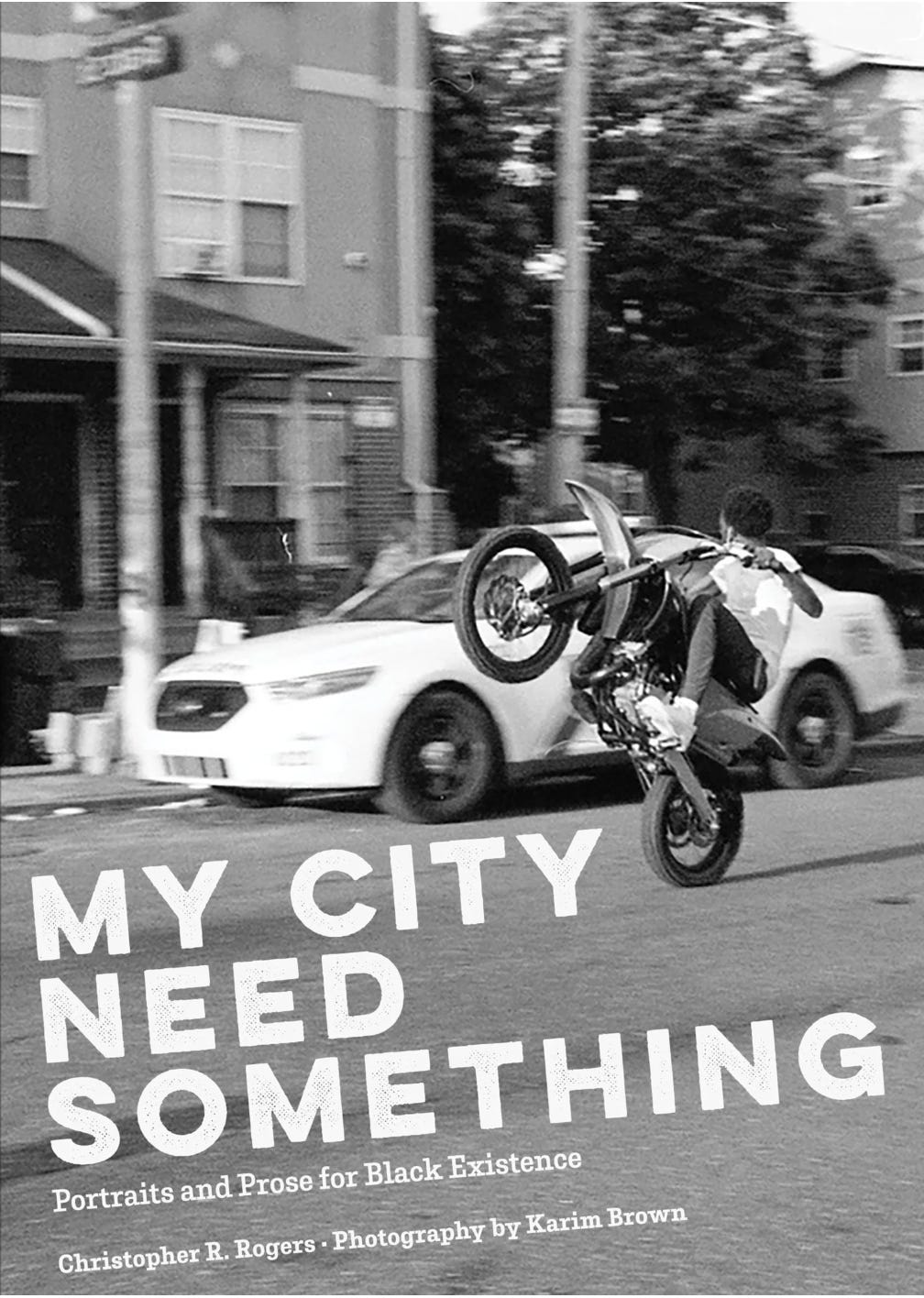
In a recent episode of the Additions to the Archive podcast, I had the opportunity to speak with author, educator, and cultural worker Dr. Christopher R. Rogers about his recent book, My City Need Something: Portraits and Prose for Black Existence, a book that spans and expands Black literary and musical history, while at the same time managing to ground itself to place in Philadelphia. In fact, it is there that Chris acts as a Facilitator at the W.E.B. DuBois Movement School for Abolition & Reconstruction, an organization whose work I’ve experienced first-hand, so I wanted to speak with him more about it.
Sullivan Summer: Some of the work that you do is with the W.E.B.Du Bois Movement School, which I “Abolition School” colloquially.
Christopher R. Rogers: We all do.
Summer: Okay. I know this because I actually took a course with you all; with Geo Maher. I read Black Jacobins [by C.L.R. James] which was an amazing experience, and I have recommended the experience to a lot of people. Talk about what is Abolition School?
Rogers: Yeah. Thank you for that. The long title, W.E.B. Du Bois Movement School for Abolition and Reconstruction, short title Abolition School, is a political education project. Geo Maher was the founder of the idea. I was the second that came along with him in sort of building it out. It’s a political education project based in Philadelphia. We do 12, 13-week cohorts of organizers and activists through a third world Marxist approach that’s also grounded by W.E.B. Du Bois’s Black Reconstruction. And we’re thinking of, like, how do we create what Avery Gordon might call a “shared vocabulary of resistance” within our community, right? Like, how do we recognize the ongoing-ness of our struggle? As my homie Ant Smith, who’s part of the project will say, we were all present and experienced the downturn if you will, or the ruptures in our relationships and organizations that happened after the most recent uprising in Philadelphia. What are the practices, you know, habits, the critical connections that are needed to sustain this radical ecosystem of struggle here in Philadelphia? And how do we anchor that within the long history of Black struggle, or the Black radical tradition as it exists in Philadelphia?
What are the […] critical connections that are needed to sustain this radical ecosystem of struggle here in Philadelphia?
Rogers: It’s an incredible program. We have about 300 that we sow folks through so far, and we have a new cohort starting this fall. And certainly, I couldn’t write the level of things that I write without also being fully committed to being in the struggle with folks, right? I have access by being a supporter, a comrade, a part of a collective of folks that are trying to do real, sincere things, that are taking on some of the most persistent issues of our time. So Abolition School is on its way. We’re growing, and certainly speak to the need of political education and radical experimentation that needs to take place in our cities.
Summer: How long has the school been open and doing what it does?
Rogers: We just put out another anthology called Everyday Sh!t.
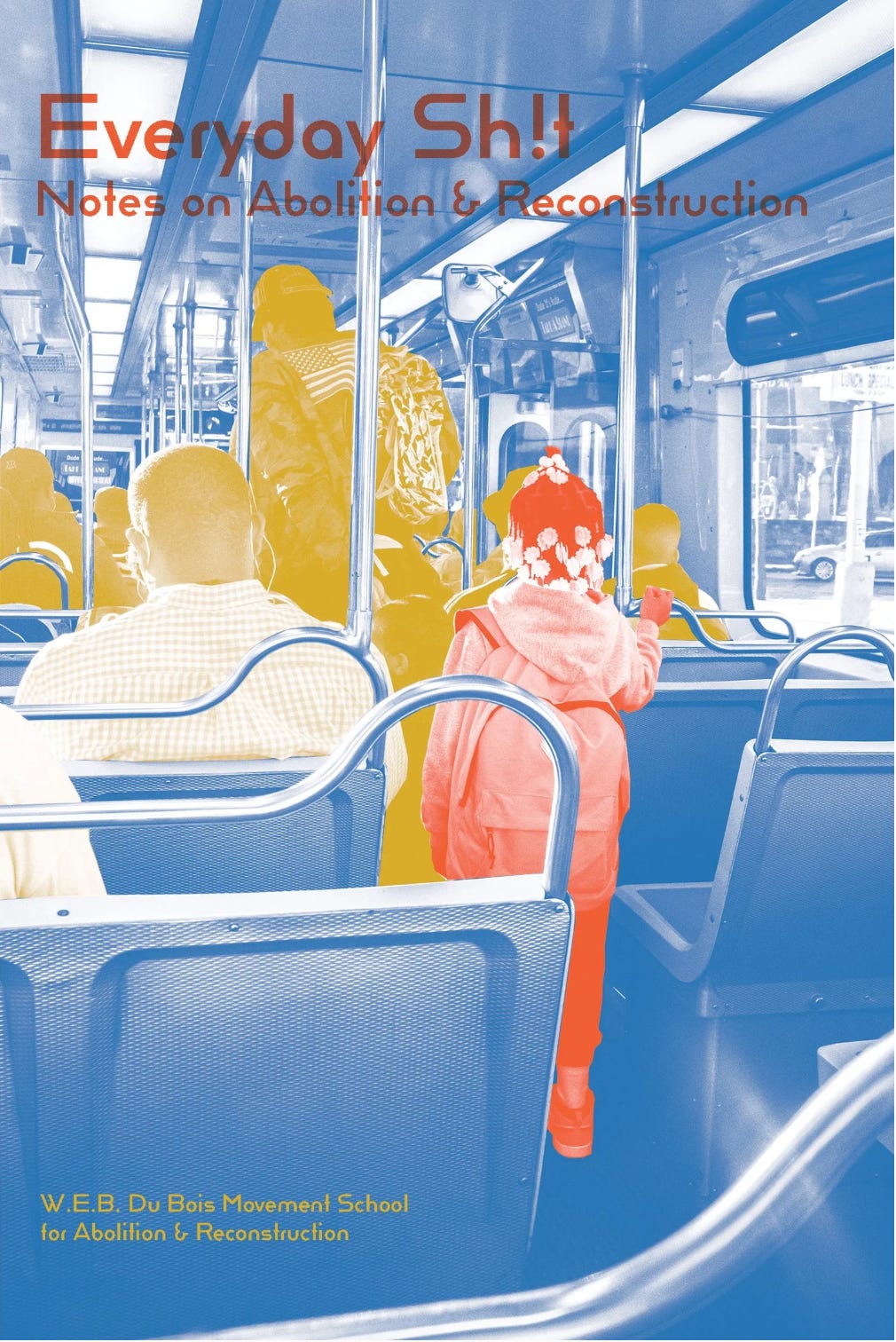
Rogers: That’s out through Common Notions Press as well. And in that collection, I have a sentence where I said, “Geo sent me a PDF of what Abolition School was to be in March of 2023.” So we’ve been building from this document and our imaginations and struggle alongside many of our comrades and figuring out, How do we build this thing? since 2023.
Summer: Okay. That feels important because I’m thinking about, you know, we’re in a time when institutions are losing funding. We know the things that are happening. We do have these other places for education, like Abolition School. But for people who don’t live in large metropolitan areas that are just more peopled, or those that may have an idea but have no idea what to do, you look around at these other organizations and they feel like they’ve been there forever. I had no idea Abolition School only started in March of 2023. I think the session I took part in was 2025. I had no idea that it was essentially a new thing at the time. It felt very established. What advice would you have for people in communities that want to start something?
Rogers: I think the feeling of it being so grounded is, like, the relationships that made up Abolition School certainly go much farther back than that. We came in with an awareness of each other. But then Abolition School became a new vehicle by which we’re bringing those things forward. Ruth Wilson Gilmore — I look up to her in many different ways and read everything she puts out. And she has a story about one of the issues that she felt in an old collective where she would notice how they were going about their political practice; in some ways it’s a critique of the “book club model.”
Now, Abolition School has curriculum. You know, we put it out. We got a facilitation guide. You know, if you really want it, hit me up. Otherwise, it’s available through Common Notions Press. Please get it.
Rogers: One of the things that you can get into is what she says is the “recitation.” You can, you know, begin to notice the issues, right, and be like, “Mariame Kaba speaks about this in this way,” or, you know, “Angela Y. Davis tells us to do this,” or, “Amílcar Cabral during the [African Party for the Independence of Guinea and Cape Verde] did this,” right? You’re kinda building up this arch; you’re looking at the moments in the past. And she says, Well, we have to match that with sincere experimentation in our community. It’s not just reciting, but it’s also rehearsing those things that we read.
What I recommend is usually for folks to begin a practice, yes. Find some theory, or theories that you feel like speak to your experience and present, like a theory of change. And then, you know, find a couple people to just try some experiments. It doesn’t have to be anything big, you know? I think the last thing I was imagining was the laundromat. I was gonna do a residency at the laundromat.
Summer: I love that.
Rogers: ‘Cause I was like, Yo, people got wait time, you know? And if we bring snacks and juice, I think they might give us five minutes to say, Hey, what are your issues that you’re facing in community? You know? And what are things that we can do together to do something about them? Like, small gestures. It doesn’t always have to be shouting down Babylon in front of City Hall, you know? But ways of gathering folks together and building a sense of connection and figuring out how do we materially address people’s needs, but then also become aware of how the system reproduces those inadequacies or that precarity or that vulnerability. And also thinking about what it takes to go to the root. Those are the kinds of things that I feel like make sense.
I would say begin where you are.
I would say begin where you are. Some of you may be involved in a church or you might be saying to yourself, Hey, radical or revolutionary people don’t come here. I promise you, if you’re honest and you’re sincere and you speak to the fullness of people’s lives, people will discover that this system ain’t working. And if you have enough love and enough ways of gathering together, I think you can also begin to say, we can also figure out what the answer is for ourselves, at least, and begin projects from there. So don’t get caught up in trying to make it look radical. Just do the work.
Summer: What else are you involved in right now?
Rogers: Friends of the Tanner House; Henry Ossawa Tanner’s house. This is 2908 West Diamond Street. I used to be the program director at the Paul Robeson House and Museum in West Philadelphia. This is Paul Robeson’s final home. He lived with his sister for the last 10 years of his life in West Philadelphia. My role as one of the caretakers for that property was to help reactivate Robeson’s legacy. We did that for about eight years. Now we have a property that we’re working on, Henry Ossawa Tanner’s house, who’s an incredible painter. His family legacy is really rich as well. Um, so much so that Carter G. Woodson called the house “the center of Black intellectual life in Philadelphia” because of the connections that his father was a bishop of the AME Church. He ran the Christian Recorder, which is the newspaper of the AME Church, during the time of Reconstruction in this country. He was not only following the story of the growth of the AME Church, but also the story of Black struggle. We’re working on turning that house into a new community arts workshop. It’s already a national historic landmark as a house. And we know how under threat Black heritage is in this moment. So what I’m really excited about is this sort of hub of arts and culture. And then with the Abolition School, seeing the ways that these two things work together.