
Dr. Antwain Hunter Asks: “What Do We Want Out of American History?”

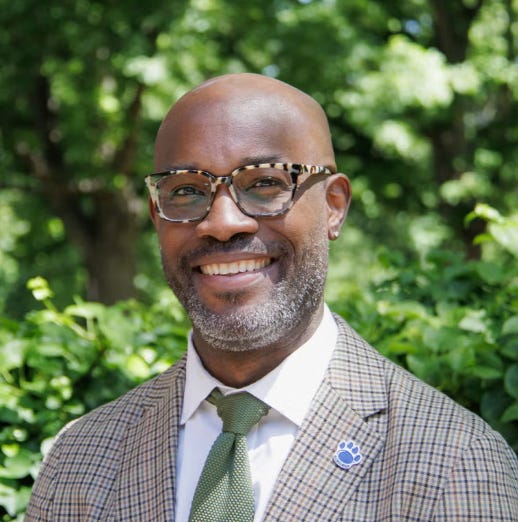
Antwain K. Hunter is a historian of slavery and freedom in North America. After speaking with him about his latest book, A Precarious Balance: Firearms, Race, and Community in North Carolina, 1715-1865, on the Additions to the Archive podcast, we came here to talk further. This is part two of my interview with Antwain (you can find part one, “Southern Vice,” here).
Sullivan Summer: Much of the work that you do as a historian is in the antebellum and Civil War eras. I was speaking with another author recently,1 and he was saying there’s not enough Black historians doing the Civil War. There needs to be more. We need to create space, the collective “we,” for more. Talk about how you think about that, if you think about it.
Antwain K. Hunter: I thought about this a lot. I think that person’s spot on. And so for me, you know, I went to Penn State. I was in the Richards Civil War Era Center there. Tony Kaye was my advisor. I worked very closely with Bill Blair as well. Bill Blair directed the center. And so I cut my academic teeth in a Civil War era center. The conflict and all of the apparatus around it are always near and dear to my heart.
I think that we do need more Black folks working in the Civil War era. And I think also not being afraid to claim that because, I know sometimes folks say: Well, I do work on slavery, emancipation; or: I work on the antebellum period. A lot of us, our work is in that the Civil War era.
I think that sometimes when we talk about the Civil War or Civil War era, people think military history. So they want to know what 32nd Illinois Infantry was doing on the second day at Chickamauga. That kind of stuff. There’s a space for it, and I’m glad that some people are doing that work, but that’s not the type of work that I’m doing. I’m interested in some of the social dynamics. The way that laws are structured in this era, in this build up to this conflict that looms so large on the way that we understand ourselves as a country.
I think the reason we need to think about expanding how we think about what the war is and who the Civil War is is because if we don’t, we cede ground to the folks who see the Civil War as this struggle between a bunch of brave dudes and like, that’s the whole thing; and that’s it. It’s just neat and tidy. And I’m like, No, you can’t tell that story. You cannot tell the story of the American Civil War without telling the story of the African American experience in it. You just can’t do it. It would look crazy to do it. Right?
You cannot tell the story of the American Civil War without telling the story of the African American experience in it.
Hunter: I think also I would push that to Reconstruction. There are people doing great work on Reconstruction. You can’t look at the Civil War without thinking about Reconstruction. But that whole run of things—we need more diverse voices in it. Because I think, it’s not that only Black folks ask questions about Black people, or do work on Black folks. My advisor was white. You know, I have [white] friends who are scholars who work on African American history. But I do think that the more diverse pool of scholars you have, the more diverse types of scholarship people are going to be doing because they’re resonating with questions that some people don’t think about, or understandings of the past that maybe other folks haven’t thought about because it’s not part of their family legacy, or not part of their family tradition.
I think that the more people we get, more Black folks doing it, thinking about like, more scholars of Mexican descent who might be asking questions about Mexico’s relationship to the Confederacy. They’re sharing a border right when those questions come up. Indigenous folks. Right? There’s some scholarship on Indigenous roles in the Civil War. There’s space for more. I think all of that, all of that.
You see a lot of those big chains where you start to get those trickling things coming in. It’s with the inclusion of more women and people of color in the profession generally. That came in an earlier generation. I think more of that is always good, because otherwise it’s like you get this view of the war that I think doesn’t really—I mean, I’m not knocking anybody’s work, but I think that it doesn’t give us a full picture. We kind of have this thing of like, Oh, yeah, it’s a bunch of brave dudes and they all fought and everybody was right in their own way. And then that’s the end of it, and we all move on. And everybody should be memorialized with statues on the county green. It just leads us to the space where we’re cutting out the black experience if we don’t actively push to include it. And not to, you know, I don’t want to get up on a soapbox, but we can see this right where there are debates about whether or not Black History should be an AP course, or whether or not the signage at some of the national historic sites that talk about slavery should be taken down because it’s divisive or what have you. Right? That kind of history? People are trying to erase it all the time. Like, you have to actively keep working to bring it about. Yeah. Yeah, it’s a very, very good question.
That kind of history? People are trying to erase it all the time.
Hunter: I think that we’re in a moment of, maybe crisis is too strong a word. But actually, maybe it isn’t. I think that we’re kind of in this moment of crisis with higher education, and also just with the way that we engage with our history as a nation. One of the things I hope people do is to just think about what is the thing that we want. Think about history. What’s the thing that we want from this? Or, what’s the thing we want from scholars generally? Is it that we want a narrative that always gives us the warm and fuzzies about the nation and its past? Is that a thing that is helpful or useful to us? I would argue that it is not. I think that what we should strive for is a complete picture. And that’s always the case. It doesn’t mean that it’s always perfect, but it also doesn’t mean that it has to always all be terrible.
It’s one of the things I tried to do in my previous book on firearms. It’s a tough subject, right? There’s a lot of death and a lot of destruction, but it’s not as if that’s the only thing. There also are elements of family and community and those pieces. There are instances of interracial cooperation. It’s not just that the white state is oppressing Black people. Also, there are white folks who, for a variety of reasons, engage in trade with Black folks, who assign bonds for them when they’re in court cases. Our past is complicated, our relationships are complicated, our relationship with the state is complicated, and we should lean into those things. That’s not an inherently bad thing. And obviously, this is an audience of readers, people who are thinking and who are asking these questions and pushing the envelope and not just sort of taking things at face value.
What do we want out of American history?
Hunter: What do we want out of American history? I think for some folks, they just want to feel good. But that’s not what history’s job is. You can watch a movie for that. History is something different, right? Let’s try and get to a complete picture of the past. And let’s constantly, you know, push each other.
In my book, I’ll talk about other scholars, things that they didn’t do. And then in a couple of years, somebody’s going to write a book and they’re going to be like: That Hunter guy—he completely forgot this thing. Or he didn’t do this, or why didn’t he do this? Or, he didn’t ask this question. And I don’t shy away from that. I like that. That’s what we need, those conversations. I did the research, this is what I came out with. Somebody else might look at [another location], Arkansas, and be like: Oh, it’s a completely different ballgame. Somebody else might look at, you know, Virginia. Oh, there’s some things that are different. But to me, I’m like, all those types of projects—I look forward to those. I look forward to reading them.
I want to see what other people think about these sorts of things. We can’t be afraid to have discussions and to sometimes be like, Oh yeah, we dropped the ball on this point. Whether it be as an individual, as a person, as a state, as a nation, sometimes that happens. So let’s address it and let’s move forward. You don’t just sweep it under the rug. That doesn’t serve any purpose.
We can’t be afraid to have discussions and to sometimes be like, Oh yeah, we dropped the ball on this point.
Hunter: And then just a last point about universities: we have to ask ourselves, what do we want from universities and scholars? There’s increasing scrutiny of scholars as if we’re all some sort of like, radical lunatics. We’re not. We’re trying to teach students our subject matter. We’re also teaching them how to be critical thinkers, teaching them how to be engaged with the world that they’re living in, with the past, in the nation that they’re living in, to be able to write, to put together an argument, be able to defend that argument with evidence, to find evidence, to understand it, to read through it and make sense of it, to critique scholars. Right?
I tell students all the time, you’re going to disagree with each other, you’re going to disagree with me, I’m going to disagree with you guys. And that’s okay. Like, we don’t have to agree on everything, but we find ways to make sense of the past and to learn how to craft an argument; teach them transferable job skills. That’s what we do here.
We’re in this world where we’re demonizing experts in a variety of things. None of this is going be helpful in the long run.
Hunter: We’re in this world where we’re demonizing experts in a variety of things. None of this is going be helpful in the long run. It’s true of the academic space. It’s true of like, medicine. I don’t go to the mechanic and offer my opinions on what you should do to my car. I’m not a mechanic. I don’t understand how cars work. I just bring it in and I let the professional handle it, right? I think that you can always ask questions, but I think that we have to come to a place where we figure out what is it that we want out of higher education. What is it that we want out of government. Out of our relationship with each other. There’s just so many things that feel like they’re in flux right now, and most of it does not feel particularly helpful.
Summer: I’m reflecting on this question: What do we want? What do we want from scholars? Is it warm and fuzzy? And for me, the term “status quo” jumped into my head. Like, this desire for preservation of the status quo. You can be additive to a point. But there’s a tipping point at which what you have just added is no longer okay, because now you’ve upset the apple cart. You’ve upset the status quo. That’s what it feels like.
Hunter: I think you’re absolutely right. And I think one of the things that’d be fascinating is like, think of any sort of marginalized group and center them. My position at North Carolina is, I’m the North American slavery person essentially. But over the course of my career, I’ve taught a host of courses, Civil War, Reconstruction, American Revolution, the early Republic, the US South, Slavery in the US Civil War. I did a bunch of grad courses and different things. But it’s one of those things where, I think that there are a bunch of different ways that we can think about this, and these marginalized folks are central in a lot of things.
What would happen if we just did a US survey class, this was just your general run of the mill US history, but if it was centered on women?
What would happen if we just did a US survey class, this was just your general run of the mill US history, but if it was centered on women? And so you’re still talking American Revolution, but in every step, women are centered in it. Or Black folks are centered in every step, Indigenous folks in every step. I think the shift in perspective would be incredibly useful. And I don’t hear that and get nervous or afraid like, They’re taking away. . . ! No. It’s just a different perspective. And I think that would be, that could be interesting. It could teach us things that we didn’t know previously. Having those added perspectives is useful.
Whose voice should we privilege? Is it only the elites in government and business and finance? That would be crazy, right? What about poor white folks? Do they get a say in any of this? Do we think about their perspectives? Laboring class peoples from all different walks of life. People out in rural North Carolina. Do they get a say? All of those voices should be part of the conversation. It feels sometimes that there is this effort to preserve the status quo. It seems like we’re so afraid to just open the door to something different that we’re doing ourselves a disservice, and setting ourselves up to be people who can’t engage in a society and a world that just is what it is.
[We’re] setting ourselves up to be people who can’t engage in a society and a world that just is what it is.
Hunter: It’s a diverse place. You can try and cut it all out. It’s not going to go away. You’re just setting yourself up to not be able to function as well as you should be able to. Or to get an education that is like, half done. Why do you want the half-baked version of American history, when you could have the full version? Like, what are we doing? What’s the message that we’re sending to our students about these things?
The thing that is most frustrating about a lot of this is that it seems as though in many walks or facets of our life, there are people making decisions on things who are probably not the people who need to be making decisions on those things. There are people who don’t understand healthcare who are like: I’ve got thoughts about healthcare. Cool, nobody cares, right? There are professionals in this, let them do it. There are people who have thoughts about how education should work, who don’t work in education, who have never worked in education. Just because you went to a college 40 years ago doesn’t mean that your opinions on how a college should run, or what it should look like, are valid.
There’s a lot of stuff that people don’t understand about how things function. And you could come learn about those things, or you could sit and sort of just write legislation, or push policy that isn’t serving those institutions in the long run. And what do I know? I’ve not been at it that long. This is my 12th year or thereabouts of being faculty. I was at a different university before I came to Carolina. But it’s like, just let the people who do this for a living figure it out. You got concerns, raise the concerns. Let’s hear them, let’s have a conversation, let’s talk. Let’s have a dialogue about it.